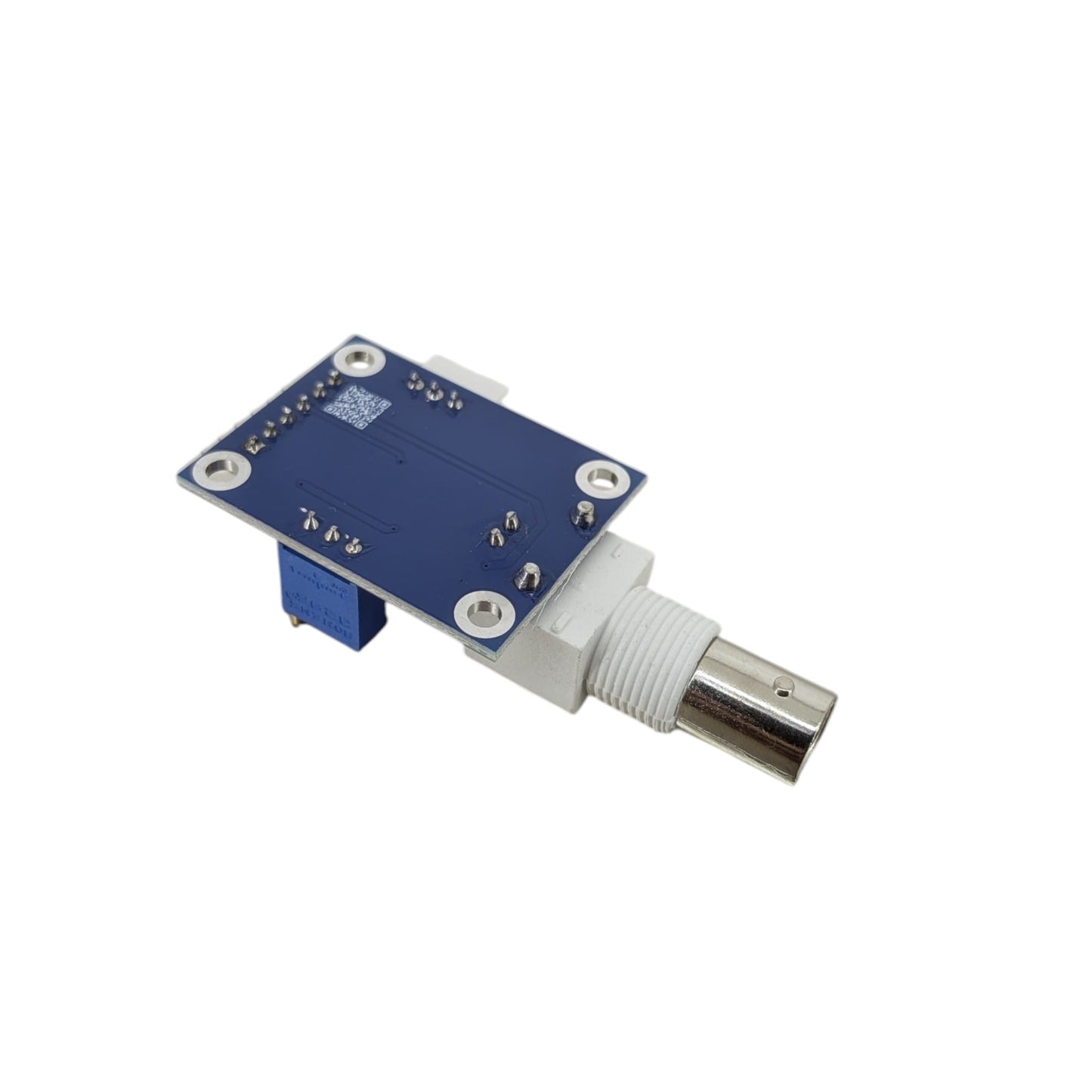


Arduino pH & Temperature Sensor Kit | 0-14 pH BNC Probe + Buffers
Arduino pH & Temperature Sensor Kit | 0-14 pH BNC Probe + Buffers
Couldn't load pickup availability
Short Product Description
Short Product Description
The Arduino pH & Temperature Sensor Kit is a complete liquid testing solution designed for DIY hydroponics, smart aquariums, and STEM environmental projects. Featuring an industrial-grade 0-14 pH BNC probe, a dedicated signal conversion board, a waterproof temperature sensor, and three calibration buffer solutions, it provides highly accurate water quality readings. Available for instant pickup at Sun Cheong Computer Co. Ltd. (新昌電腦有限公司) in Sham Shui Po, our staff can provide expert wiring advice to help you integrate these analog sensors seamlessly with your Arduino or ESP32 microcontrollers.
Key Features
Key Features
- Dual Sensor System: Includes both a pH composite electrode and a waterproof temperature sensor for comprehensive water quality analysis.
- Wide Measuring Range: Accurately detects acidity and alkalinity levels from 0 to 14 pH in liquids ranging from 0°C to 80°C.
- Standard BNC Connector: The pH probe uses a universal BNC plug for a secure, low-interference connection to the signal conversion board.
- Complete Calibration Kit: Comes with three bottles of pH buffer solution (pH 4.00, 6.86, 9.18) for precise manual zero-point calibration.
- Arduino Compatible: Outputs standard analog signals (PO and T1 pins) that are easily read by the ADC pins on Arduino, ESP32, or Raspberry Pi boards.
- Fast Response Time: The high-sensitivity glass electrode provides accurate pH readings in under 2 minutes.
Full Product Description
Full Product Description
Comprehensive Water Quality Monitoring for STEM
This pH and Temperature Sensor Kit provides everything you need to build a real-time liquid monitoring system using your Arduino or microcontroller. By combining a highly sensitive pH composite electrode with a dedicated waterproof temperature probe, you can accurately measure water acidity and temperature simultaneously. This dual-sensor approach is essential for DIY hydroponics, smart aquariums, and automated chemical mixing, where temperature variations directly affect the accuracy of pH readings.
High-Precision BNC Probe & Signal Board
The included industrial-grade pH probe connects via a standard BNC connector to the signal conversion board, ensuring stable, low-noise analog outputs. It boasts a wide measuring range of 0 to 14 pH and operates safely in liquid temperatures ranging from 0°C to 80°C. The signal board features an onboard potentiometer for manual calibration, allowing you to fine-tune the zero point (7 ± 0.5 pH) using the three included buffer solutions (pH 4.00, 6.86, and 9.18) to achieve laboratory-grade accuracy.
Pro Tip from Our Technicians
To maintain the accuracy and lifespan of your pH Sensor Probe, our Sham Shui Po technical team strongly advises keeping the glass bulb submerged in the protective 3mol/L KCL solution when not in use. Never let the electrode dry out, and avoid touching the delicate glass bulb with your fingers. When writing your Arduino code, remember to implement a temperature compensation algorithm using the analog data from the included temperature sensor (T1 pin), as pH values naturally fluctuate with heat.
Technical Specifications
Technical Specifications
- Product Type: pH and Temperature Sensor Module Kit
- pH Measuring Range: 0 - 14 pH
- Temperature Measuring Range: 0 - 80 °C
- Zero Point: 7 ± 0.5 pH
- Alkali Error: < 15 mV
- Response Time: < 2 min
- Internal Resistance: < 250 MΩ
- Probe Connector: BNC
- Board Pins: VCC, GND, GND, PO (pH Analog Output), 2V5 (Reference), T1 (Temp Analog Output)
- Included Buffer Solutions: pH 4.00, pH 6.86, pH 9.18 (@ 25°C)
Delivery Options
Delivery Options
- Local delivery within Hong Kong and in-store pickup.
- Free shipping for orders of HK$400 or above; HK$35 shipping fee for orders below HK$400.
- Shipped by SF Express, usually dispatched the same day for orders confirmed before 6:00 PM (Mon–Sat).
- Estimated delivery time: 1–3 business days after dispatch (Hong Kong).
- In-store pickup details (location and time) will be confirmed by email or phone message.
- Delivery times are estimates and may be affected by weather or unforeseen circumstances.
FAQ Section
FAQ Section
- Do I need to calibrate the pH sensor before using it with my Arduino?Yes, you must calibrate the pH sensor before its first use to ensure accurate readings. Use the included pH 4.00, 6.86, and 9.18 buffer solutions and adjust the onboard potentiometer until your Arduino's analog read matches the solution's known pH value.
- Why is there a temperature sensor included in this pH kit?The temperature sensor is included because the pH value of a liquid changes depending on its temperature. By reading the temperature alongside the pH, you can write a temperature compensation formula in your Arduino code to get highly accurate, real-world pH measurements.
- How should I store the pH probe when I am not using it?You must store the pH probe with its glass bulb submerged in a 3mol/L KCL (Potassium Chloride) solution inside the protective cap. If the glass electrode dries out, the sensor's accuracy will degrade significantly and response times will increase.
- Can I leave this pH sensor submerged in my aquarium permanently?This specific laboratory-grade pH probe is designed for intermittent testing rather than continuous, 24/7 submersion. Leaving it permanently submerged in an aquarium or hydroponic tank for months will reduce its lifespan and require much more frequent recalibration.
- Can I get help wiring this sensor to my Arduino at your store?Yes, you can bring your Arduino board to Sun Cheong Computer Co. Ltd. (新昌電腦有限公司) in Sham Shui Po for expert wiring advice. Our technical staff can help you map the VCC, GND, PO (pH analog), and T1 (Temperature analog) pins correctly for your STEM project.
Target Users / Applications
Target Users / Applications
- STEM Educators & Students: Building automated water quality testing stations using Arduino to learn about analog sensors and chemical properties.
- Smart Hydroponics DIYers: Monitoring nutrient solution acidity and temperature to optimize plant growth in custom indoor farming setups.
- Aquarium Hobbyists: Creating custom microcontrollers to periodically check the pH levels of sensitive saltwater reef tanks.