Collection: Sensors
Welcome to our comprehensive selection of sensor modules, engineered for makers, professionals, and students. Whether you are building with Arduino, Raspberry Pi, or ESP32 platforms, our high-quality electronic components provide the precise input data needed for your prototyping and development needs.
Essential Sensors for Every Electronic Project
Choosing the right input module is crucial for developing smart home automation, environmental monitoring systems, or interactive STEM robotics. Our catalogue features reliable hardware designed for seamless integration, ensuring high stability and accurate real-world data collection for any application.
Explore Our Diverse Sensor Categories
-
Environmental & Weather: Temperature and humidity (DHT11, DS18B20), barometric pressure, and UV sensors for climate monitoring and weather stations.
-
Motion & Distance: Ultrasonic (HC-SR04), PIR infrared, and ToF laser modules for obstacle avoidance, robotics, and proximity detection.
-
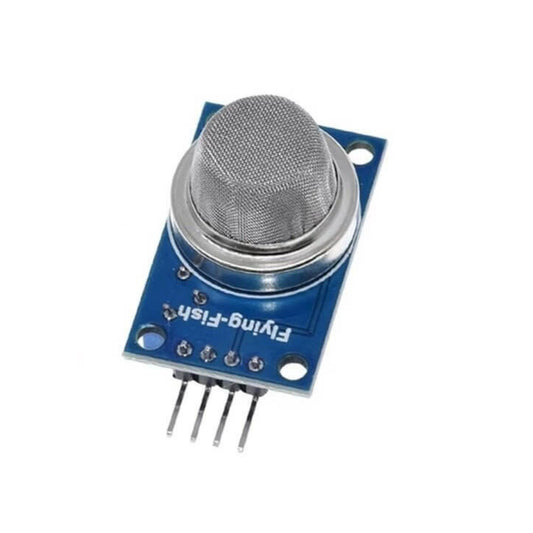
Gas & Air Quality: MQ series sensors for detecting carbon monoxide, alcohol, and hazardous gases in industrial or DIY safety setups.
-
Biometric & Health: Pulse, ECG (AD8232), and biometric sensors for developing wearable technology prototypes.
-
Force & Weight: Load cells and force-sensitive resistors (FSR) for digital scales and precise impact testing.
How to Choose the Right Sensor Module?
When selecting a module, always consider the operating voltage (3.3V vs. 5V) to match your mainboard and prevent hardware damage. Additionally, verify the required output type—analog signals or digital interfaces like I2C, SPI, and I2S—to ensure full compatibility with your existing circuitry and programming libraries.