Collection: Motors & Drivers
Upgrade your automation and robotics projects with our extensive selection of motors and motor drivers. Engineered for seamless compatibility with microcontrollers like Arduino, ESP32, and Raspberry Pi, our hardware supports everything from basic STEM education kits to advanced industrial prototypes.
Our Core Motor & Driver Categories
-
DC Motors & Gear Motors: Ideal for continuous rotation, these are the reliable backbone of automated vehicles and conveyor systems. We offer various gear ratios for optimal torque output.
-
Servo Motors & Servo Brackets: Deliver precise angular movement. These are essential components for robotic arms, camera pan-tilt systems, and RC vehicles.
-
Stepper Motors & CNC Controllers: Provide meticulous, step-by-step rotational control, making them the industry standard for 3D printers, CNC machines, and precise linear actuators.
-
Motor Driver Boards: Safely control high-current motors using low-voltage signals from your microcontroller. Our range includes popular L298N, L293D shields, and heavy-duty BTS7960 modules.
-
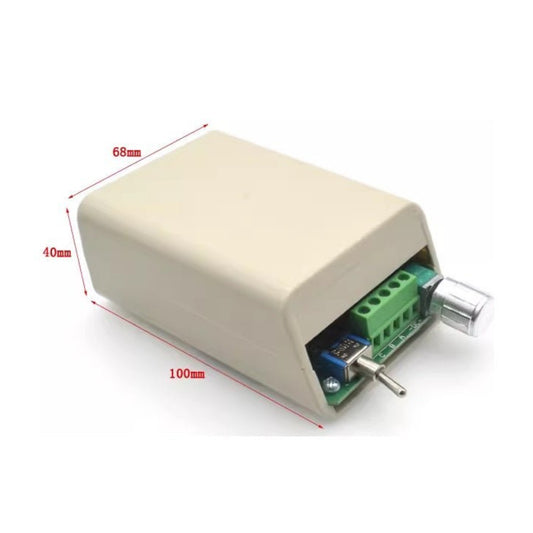
Robot Car Chassis & Accessories: Complete your build with pre-drilled chassis kits, PWM speed controllers, and specialized mounting hardware.
How to Choose the Right Component?
Selecting the correct motor is critical for the efficiency and performance of your build:
-
Require continuous, high-speed spinning? A standard DC Motor paired with a PWM speed controller is your best choice for adjustable, continuous motion.
-
Need to control an exact angle? Choose a Servo Motor (e.g., MG996R or SG90) for accurate, limited-range movement.
-
Building a 3D printer or precision slider? A Stepper Motor combined with a dedicated stepper driver (like the A4988) ensures exact positioning without the need for complex feedback loops.
Explore our reliable hardware selection to power your next mechanical innovation.